"It almost goes without saying that we’re spoilt for choice here. The nineties was, after all, the decade that gave British motorists more options than ever before. Not only were European models - such as the E36 BMW, Audi "


There’s a good reason why DCI Gene Hunt drives the cars he does in Life on Mars and Ashes to Ashes. Few things scream seventies louder than a golden-brown Mark III Ford Cortina, or eighties louder than a red Audi Quattro. Iconic, instantly-recognizable cars like this are easy cultural shorthand for their era. Stick one on screen and your eye is immediately drawn to it. And if you make the car the star, maybe the TV company has to spend a little bit less on props and street scenes to make its drama feel properly period.
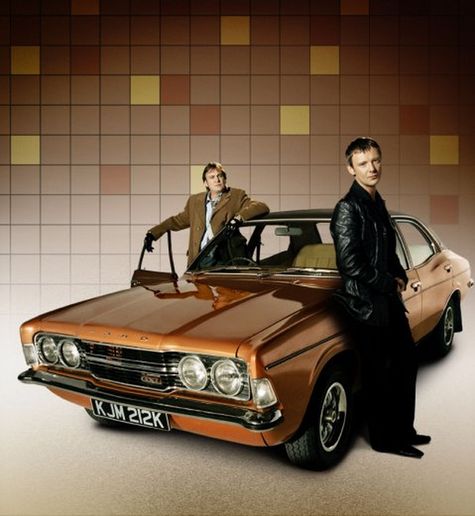
Iconic cars represent their era, but they reflect it too. Much as we’d like the car to exist in a bubble, unaffected by the trends and crises of the outside world, it just can’t. The car shapes the world: along with the computer and industrialized warfare, the car was one of the biggest influences on the last century. Our lifestyles and our physical environment are organized around it, but it influences the culture too. The freedom offered by the internal combustion engine, whether fitted to a car or a motorbike, has energized music, art, literature and whole youth movements.
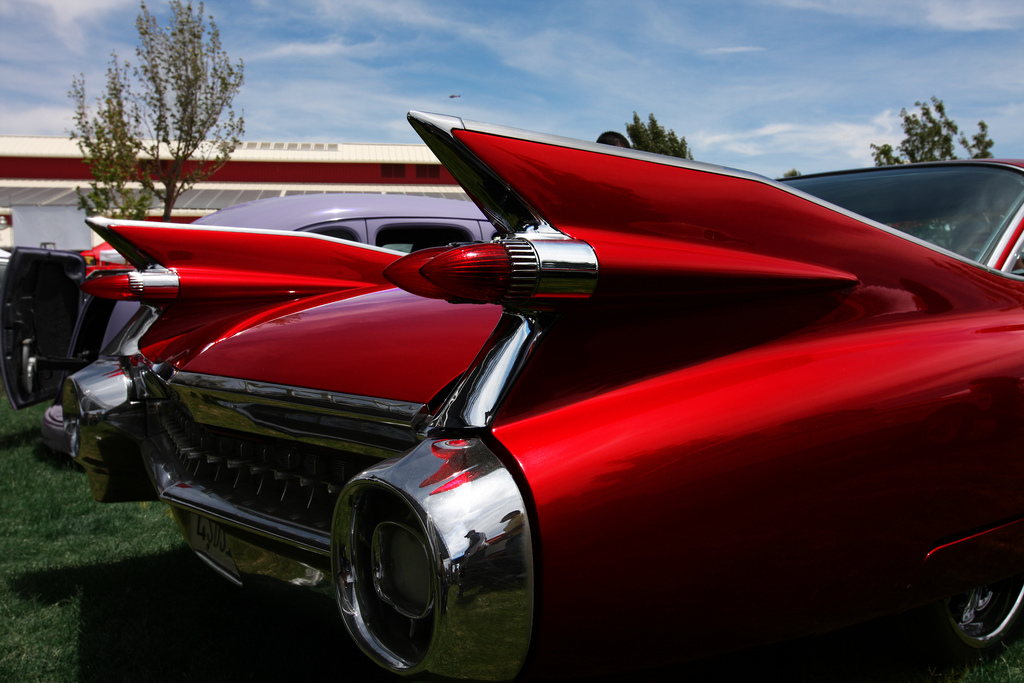
And in turn, the cars we drive are influenced by their times in exactly the same way as the clothes we wear and the music we listen to. Think of a fifties American car, and what do you see? A tail fin. What does a tail fin represent? The jet age: a period of intense technological and economic optimism – in America at least – in which speed and power were so venerated, and advancing so fast, that the cars started to look like planes, and the planes turned into the rockets that would take us into space. Car design of the period reflects that so perfectly that if you show someone a tailfin now, they’ll smell a drive-thru hotdog and hear a Chuck Berry record.
Look at the work of designers like Harley Earl at General Motors and Virgil Exner at Chrysler: one sounds like a rock’n’roller, the other like a character from a period sci-fi puppet show, but together they gave us some of the most exuberant car design ever seen, culminating in Earl’s ’59 Cadillac Eldorado, his final and most outrageous work. And what did we get in austere fifties Britain? A steady diet of grim, grey, porridge saloons, with the apologetically-befinned Ford Anglia 105E only arriving in the same year they launched – almost literally – that Cadillac. Case closed.
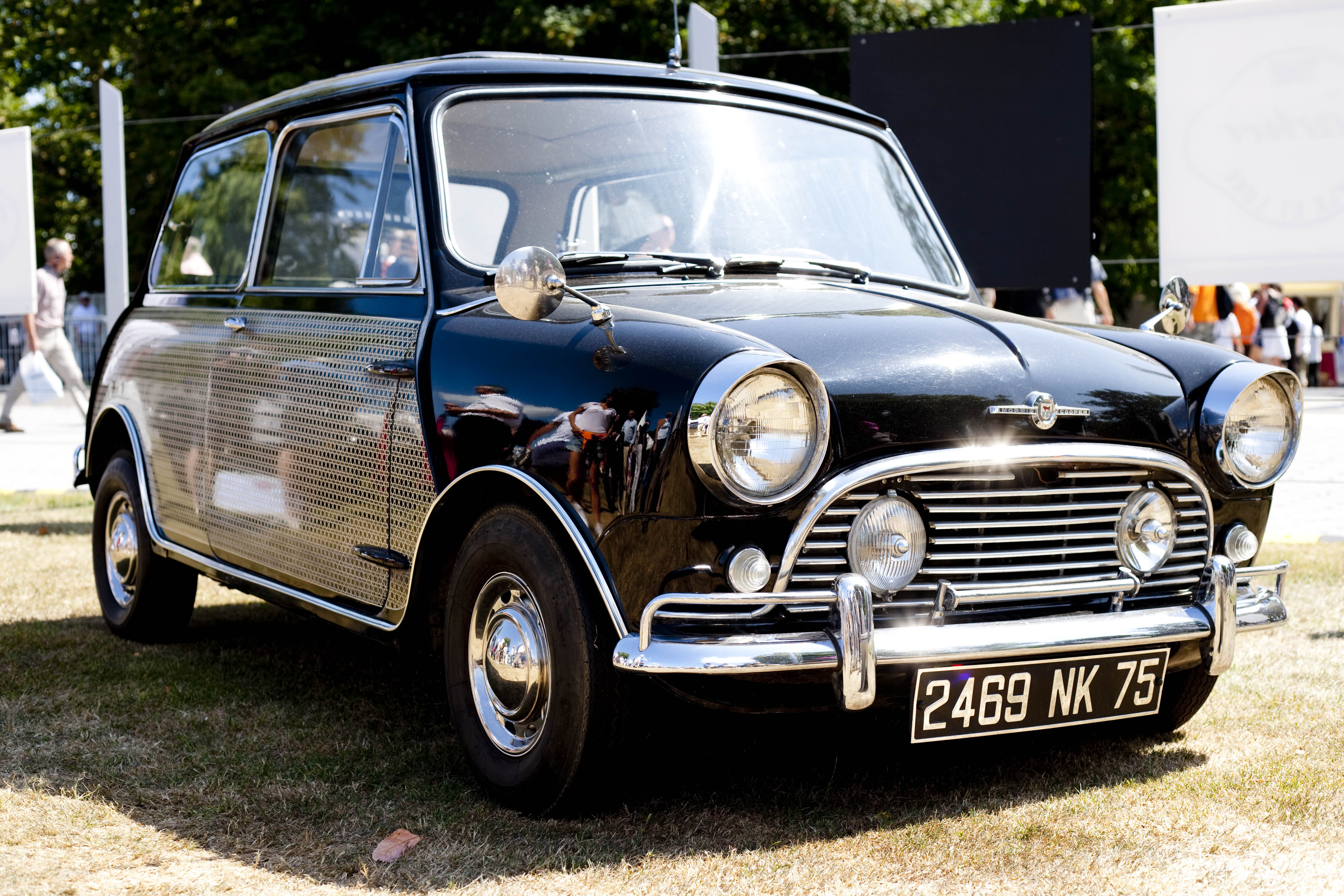
Same applies in the sixties. More than the Lamborghini Miura or the Jaguar E-type, I’d argue that the original Mini and Fiat 500 are the iconic cars of that decade: partly because their accessibility put millions more on wheels, but also because they reflect the classlessness of the time; a Mini might have been your first car, but the Beatles and Peter Sellers drove them too.
Seventies? Harder to identify an icon, but that just proves the point. Beset by recessions and oil crises, the car industry lacked the confidence it had in the previous two decades, and it shows in the cars it produced; there were some great supercars like the awesome, angular Countach, but from makers which lurched from owner to official receiver and often lacked the cash to put the wheels on. There was a definite seventies look – Hunt’s Cortina being the perfect European example – but few stand-out cars. Frightened by the price of petrol and the threat of the sack, people wanted reliability and affordability in everything; this was the quartz watch decade. In cars, in the US, this mood killed the big-block V8 engine. In Europe and Japan, it spawned the hatchback; VW launched the Golf, and Toyota’s Corolla broke out of Japan and began its ascent to become the world’s best-selling model.
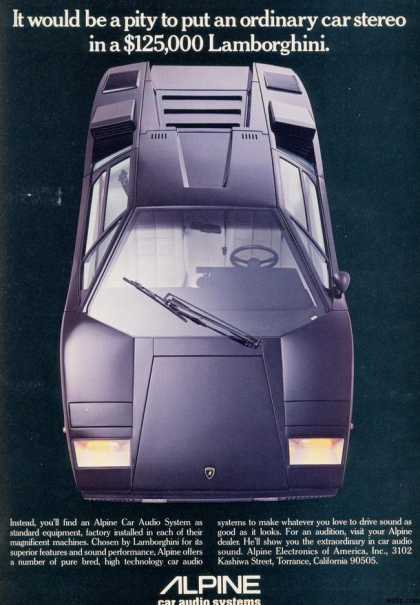
Things were better in the eighties: greed was good, and made near-200mph supercars like the Ferrari F40 and Porsche 959 both socially acceptable and economically viable. The Quattro and hot hatches made a little of that mojo available to those not in receipt of a Gordon Gecko-sized bonus.
Nineties and noughties? Maybe we’re still too close to spot the real icons, and what they say about the times. The nineties produced arguably the greatest car ever made in the McLaren F1, but recessions and economic crises in Asia and Latin America brought the uncertainty back: for all its incandescent performance, only 71 road-going F1s were sold.
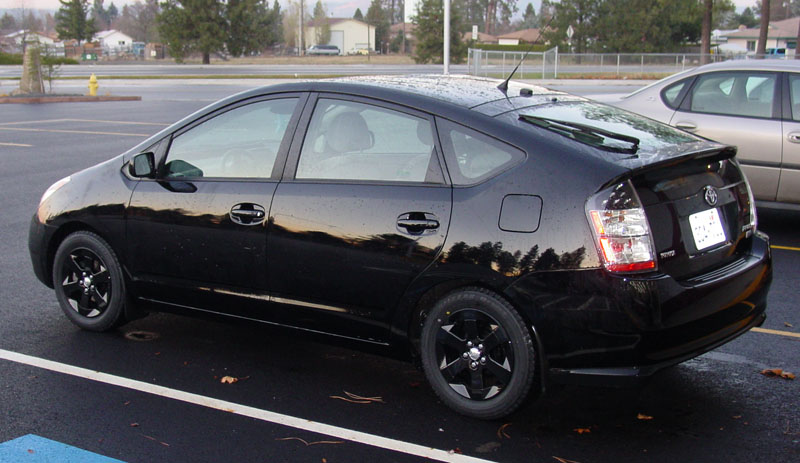
Autocar magazine’s readers have just voted the current Range Rover the car of the noughties, but I’d disagree; by the time the decade ended the zeitgeist had turned so decisively against big SUVs that – for all its ability – I think it gets disqualified. Instead, I’d nominate the Prius. As a hybrid in a unique bodyshell, not only is it arguably green, but it’s obviously, visually green. That’s why diCaprio and Diaz are always seen in theirs. It tells other people you’re doing your bit, even though you’re still driving a car and probably haven’t altered the rest of your lifestyle much.
How noughties is that? Maybe, thirty years hence, when the BBC makes a retro cop-drama set in 2009, the lead character PC PC will drive a Prius, but decline to get into car chases because they’re ‘just not sustainable’.
CLICK TO ENLARGE

"It’s more than just the motor. It’s the history; the stories the metal tells with each scrape, bump or nick and the memories that the fabrics of the seats weave with their smell and feel. To many, that’"

"Motorcycles & rock ‘n’ roll. Strawberries & cream. It’s a cliché of course. But at the heart of every cliché there sounds a note of truth. Alan Forbes knows all about this. “You can feel free when you play "

"Cars are all about people. It’s obvious really - but at times this simple truism can get lost. With the obsession with speed, power, style and design - with the object itself, you can forget that there is nothing "


LOAD OF RUBBISH. WHAT YOU WANT IS A BIG FAT V 8
The Prius may aspire to be green to drive but its complex construction is far from green to manufacture! If we must have new cars they should be simple to manufacture minimum of complex electronics last a long time & easy to recycle at end of life.
LOAD OF S… WOT YOU WANT IS I BIG FAT V 8
Prius is lighter then many similar sized cars with a battery that will be recycled, Prius hybrid drive does away with a lot of 'junk' that normally hangs off the engine, there is no alternator, starter motor, power steering pump, belt driven aircon pump – basically all the stuff that goes wrong on an old technology car!
Good point. Stripped down, simple cars are the future. More fun to drive too. Things come full circle.
Keith if you are referring to the battery pack in the Prius as not being green to manufacture it may be but it definitely will be recycled and it lowers the amount of polution from the individual car.
Its a bit like saying the precious metal catalitic converter in all other cars make them ungreen. In the quest for low emissions there is always going to be trade offs unless you buy a bicycle.
Agree fully with Keith re the Prius. Yes it may save some fuel, but what impact does a lithium battery have on the environment? Furthermore, in my experience it achieves around 50mpg on the mway. Some of the new diesels achieve far better results than that. So: We have a hybrid with a somewhat larger environmental footprint than the marketeers whould like us to believe, it is slow and heavy, ugly to look at (opinion) and doesnt return such a fantastic consumption…. What have we gained?
Cars like the Prius are pretentious. Even if the manufacturing process is super-green and every last bit of the car is recycled, no one seems to take acount of the fact that the electricity used to charge the battery must be sourced from nasty old nuclear or fossil fuelled power stations. These cars actually cause more polution as they are more inefficient than burning the source fuel in the engine at the point of use. Just ask any scientist/engineer who knows what they are actually talking about rather than celebrities or journos who do not! Want to be greener then a/ keep your old car; as is, in general, the longer a car is kept in use the greener it becomes as you write off the pollution making caused in the first place. b/ walk a lot more. c/ don't believe every bit of green guff profit seeking car manufacturers or ill informed and/or deceitful goverments and media types tell you.
@Steve
Agree absolutely that keeping old cars running is greener than replacing
them, and the scrappage scheme has done untold damage in this regard – yes
the new cars are more efficient and less polluting, but you had to build an
entire new car, with all the emissions, toxic metals and plastics that
requires.
Playing devil's advocate on the EV side – the power does have to come from a
power station, it is true, but it is surely easier to manage and contain
emissions from a few power stations than from literally millions of cars
spread around the country.
This is only really aimed at the Prius bit but here goes, I have Motorbike, and have always had 2 wheels for my daily commute since I was 16 . When I had the vespa I was putting in ONE POUND'S worth of petrol a day, 7 miles there and 7 back home, It was 15 pounds a year in tax and about 150-200 a year in insurance, GREAT ! To me, for the daily commute to town 10 miles away or so this is the way forward for those who don't have families and don't need the practicality a car has. The number of cars I see with ONE person in still astounds me today, I was never in a queue WASTING FUEL , easily kept up with quicker flowing traffic and wasn't pushed to the side of the road by big lorries. 10 years later i'm still on 2 wheels and nothing has changed for me apart from a bigger engine, I would go crazy in a car and I know I would, after feeling free and fresh I know I couldn't stand it for 5 mins in a tin box, cramped, boring, stuck in traffic, but warm, yes . 2 wheels are the ONLY recession beater, because I don't believe for a minute that we're having massive global warming problems after the winter we've just had.
A simple car may be desirable for a few but in the western world it won't fly, We have become too dependant on safety and comfort items. If you want simple and stripped try the Tata Nano if it will pass the import restrictions.
Been there done that!
The diesel is not as economical or clean as the Prius in urban use so overall the mpg will average out about the same.
Some of these comments show very little knowledge of the Prius such as the remark about the lithium battery which is actually nickle metal hydride.
So here we have a five seat 1.8 litre, 3042 lb family saloon capable of 106 mph, 0-60 in 9.8 sec and brake distance of 125 feet from 60 mph… just compare the facts instead of generalising.
Steve the Prius is not a plug in as yet, it generates its own electricity. Also if you research it you will find a full EV is more efficient and cleaner than an ICE car even considering a dirty power plant for the electricity. Point is the power plant can be cleaned up even more and monitored. We can also use renewables to produce electricity.
Its easy to say keep your old car but progress is not made that way otherwise we would all still be using horses. Where do the cars come from for all the new humans coming of age if everyone keeps their old car… get real?
What can I say Alex….everything is relative, if you chuck away your two wheeler and walk you could find even more satisfaction. No insurance, no tax, no mot, no extra pollution, no fuel cost, more manoeuvrability, better health and no flys in the teeth.
2 legs are an even better recession beater.
OK DGate
So the battery is not lithium. The fact remains there is a serious chemical polutant that has to be manufactured, recycled, discarded with all the environmental issues that goes with it. For what?
A Ford focus EVO does and I quote “just 74.2 mpg (combined cycle) and CO2 emissions of only 99 g/km” (Ford Website) whilst the Prius (Toyota website)”achieves 72.4mpg and emisions of CO2 89g/kg” Of course one could get that down by buying a Ford Fiesta or other small car. I am not punting Ford here, but it appears to me that what Toyota calls progress is perhaps more marketing hype than true engineering brilliance. I dont want to stand in the way of progress and hope that in the future the batteries will be better and more green, then perhaps I may switch, but untill then I am not convinced.
Alex I am also totally on your wavelenght. We live in a multimodal society, and should consider all possibilities to get from A-B. A mbike is a great method for short commutes, a walk is a great way to get the kids to school. The underground works well if there is a station nearby. I wish more people would get out of the one car one person mode! I do all three. (What mpg do you get from your bike?) Great debate!
My comments were not specifically aimed at the Prius but at modern cars in general. I learned to drive a car I don't need traction control, ABS, electronically controlled gearbox etc, etc, Ok fuel injection but linking this to all the other ECU's in the car – nightmare, especially when it goes wrong, diagnostic equipment frequently throws up wrong answers when fault finding it needs a savvy technician (not mechanic!) to interpret the code many garages including main dealers just swap out modules until the fault goes away, but they don't put back the non faulty units you get the bill for the lot! Remember these ECU's etc which cost about £20 in Malaysia to manufacture cost us anything from £500 – £2000. Also the components (chips) in these modules often have a short manufacturing life & are superseded in a few years so dealers won't have spares for your 7 – 10 year old car.
QED!
I fully agree with the need for simple cars that use less fuel because they weigh at lot less. I have a post vintage Morgan which looks great, is hand built to last, is infinatly repairable and goes like stink.
Mind you, I have to visit the doctor every week to get my back sorted!!!!!!!
Ben Olivers article is very informative and factual for those old enough to have experienced these periods. Its not about anyones pet car but the bigger picture of our motoring past and its future. The hybrid car is a sucessful attempt at making the petrol ICE car more efficient and cleaner because of todays concerns.
Regardless whether enthusiast's agree or not it's obviously the design of the decade as its shaping our motoring future.
Everyone seems to forget our world runs on electricity so its inevitable our transport will migrate to this as pollution and fossil fuel problems spiral.
The increased electrical load will require a modern production and grid system (which we need anyway) and will use many forms for producing clean electricity.
The motor industry and its customers are experiencing the biggest, most important and exciting change in the motorcar since its beginning.
We can either embrace it and move toward a cleaner quieter more efficient world without petro/wars or set stagnant in yesterdays quagmire of junevile perceptions of the motorcar while we slide into oblivion.
sorry but your article is some what not correct the 1970,s had a stand out car.!!! and it sold from 1969-1987 and olso had a run out of model made by none other than aston martin you seem to have forgot the legend ford capri…… aston model was the (tickford) olso the car was an icon in tv programs like the proffesionals in the 1980,s too so the petrol strikes of the 1970s, never killed a mucsle car for the uk the capri was ford euro version of the us mustang
Fritz the fact remains there are serious chemical pollutants in all cars ie oil, petrol, acid, lead, plastic, coolant, cat convertors saturated with pollutants etc etc. Most of these cars are nowhere near the efficiency of the Prius and yet are ignored or accepted for their dirt.
The present ECOnetic ( not EVO ) Ford actually owes its technology to the Prius since its using stop start, regen braking, low rolling resistant tyres, attention to aerodynamics, and striving for fuel efficiency and low Co2.
The Prius had this ten years ago! What were all the other manufacturers other than Honda doing then?
Point isFord is using a different way to achieve what the Prius has been doing for some time and are to be congratulated but so should Toyota for blazing the trail.
The Ford has become more complicated with dual batteries,one heavy duty. An upgraded starter motor and drive, sophisticated electronics, particulate filter, driver info display and has moved into the category of the Prius.
Instead of concentrating on the electric side for low urban emissions as Toyota,Ford chose to emphasise the diesel for cruising economy,hence the combined figures are within a micron of each other. If Prius had the diesel for the cruise advantage their combined consumption would be even lower than the ECOnetic due to the better urban figure.
As plug in hybrids based on Prius technology or the GM Volt design become affordable the Ford system will eventually fade into the past as a stopgap marketing solution.
In the USA Ford with the mid sized Fusion have already embraced the Prius design, check it out its impressive.
The upcoming PHEV could survive for a long time using renewable fuels even if improved electric storage systems cause wide acceptance of full EVs.
The only reason scrappage has been so popular is the Government has generated another 15% (now 17.5%) VAT on all the new cars sold…
Half the money came from Westminster (net of Vat) so thats £869.56, the other half from the manufacturer.
But on a £10,000 car the Government earned an extra £1304 VAT (at 15%) and then only paid out £869.56 net in scrappage…
Hence a £434.78 profit on every extra car sold….!!!
The only manufacturers who have won hands down are Kia and Hyundai, shifting more cars than they could ever have dreamed of.
(but not helping the balance of payments or manufacturing plants of our own country one bit!)
How very helpful…
When I think of the 1970 i think of the Triumph Stag. All testosterone and Old Spice. If a car could have a 'tache, then the Stag would certainly have one.
olso if had to go green for the sake of mother earth i would not get toyota prius i would get the bio fuel burning 1000 bhp koenigsegg the fastest coolest greenest car on the planet. plus if there are any nastys from the back it would only be the smell of the old chip shop fat…!!!!!!!!
Surely the main thing about the Prius is that it looks crap. Surely it is the job of design engineer to fit the hybrid gubbins into a pretty package. Why the bulbous rear end? It's the same with the Honda Insight. The Civic Hyrbid, and that new CR-wotsit looks pretty nice. If they make hybrids sexy, then died in the wool hyrbids will be popular amongst petrolheads.
Is the koenigsegg the greenest on the planet? I think not…..E85 is 15% petrol and with 16 injectors and 4 fuel pumps pushing the amount of fuel through needed for its performance its certainly not green.
This car does not run on chip oil, plus at £ 500.000 you won't see many.
Frank everybody has an opinion of what is attractive so its not even worth mentioning considering the multitude of designs over the years. However the Prius and Insight shape is governed by aerodynamic efficiency, thats why they have the high back chopped Kamn tail. Google Kamn Tail for a quick course.
A low drag factor is part of the overall efficiency package that goes toward low fuel consumption since at cruise a big percentage is used to just push the air aside.
Where most cars are merely styled the Prius and Insight forms are honed like aircraft for minimal drag.
The whole purpose of the hybrid is efficiency so putting the gubbings as you say in just a pretty (to you) body that is not aerodynamically optimal makes no sense.
Surely a car for the Noughties should be covered in “Bling” and be totaly outragious again, as they say what goes around comes around 😉
Modern cars,although more efficient, reliable,and longer lasting than ever before will never become true classic cars as they all go through the same wind tunnel, so all basically look the same,despite designer's best efforts. Who does not immediately recgnise a Morris Minor or Mini? A Ford Anglia or Consul? and before that cars were easily recognisable from a distance by their radiators e.g Wolseley, Riley, Austin, Morris,Standard,and what about RR,Bentley, and Jaguar? what a shame these great romantic motoring days are past! Every ride an adventure!
A sad old motorist.
Derek
in reply to d,gate no you will not see many.. bio fuel is the way forward though and even if it still burns 15% petrol at 100o bhp is still green. and yes at £500.000 you will not see many. but why do you have to drive a green car that look horrid surely if the way forward is green cars at least they should look nice not like that horrid prius.olso bio fuels are made from rape seed oil so if the koenigsegg was moded further maybe it would burn waste oil… to derek what olso have seem to have happened is all the classic car designs have made way for daft person carry cars there were modern classic that stoud out from the others like the mr2 supra etc modern classics that looked different now all we have the sad looking prius with sticking pedels lol
c.r bond its obvious you don't like the Prius and I accept that but you keep making unfounded comments that need to be defended,such as sticking pedals. Some of the 2010 Prius cars had an oversensitive abs response which is being sorted in about five minutes with a new software download. The Prius has not had any sticking pedals but some other Toyotas have.
If you are going to make wild accusations against a particular model at least get your facts straight.
to dgate do not get me rong i love toyota cars and have owned a mr2 a supra that were top notch build. but the problem is all this tech and no cars were you can repair yourself with normal tools and not a pc. this is not very green at all .take the ford pinto engine a distibutor from an escort capri sierra could be used in all three models.!!!! due to them all being the same!!!!. thats real green recycling. take the new megane on fifth gear they said to change rear bulbs (tail lights) £400 pounds at dealer a joke come on we need simple green cars not cars were car makers can line there own pockets…(ps the prius is not my cup of tea but still better than a lot of other cars on the road)
To: c.r.bond…. unlike you I do not have any affinity toward Toyota only the Prius as a” state of the art” modern motorcar “of the times” as put forth by Ben Oliver. Like it or not this is the future as all the manufacturers are busy developing hybrids or EVs in one form or another .
We are moving into a different generation of car maintenance from what you described, its no more demanding just different and has to be learned. This is especially so of old dogs into classics and still touting last century's technology. There is still the hands on mechanical side but added to this is the electronic control and monitoring side. Look upon it as the difference between the car painter and mechanic, its just another required field in our quest for efficiency and safety both of which is customer led.
Your idea of shared components is widely used as witness the Toyota accelerator pedal recall of numerous models using the same pedal assembly.
Using land for growing fuel crops instead of food is illogical, less land for food production and food prices skyrocket, fuel from algae may be a better proposition.
I too like simplicity and lightness but its an acquired taste not accepted by most of today’s buyers ,witness the SUV boom.
to dgate i do think these cars are the way forward to. but i think the new audi fuel efficent tdi,s are the best at the moment stoping and then restarting when they stop the prius does not have that in its record .plus one thing with the new green audis they look nice to. we must all face the future of modern car travel but. i know a lot of persons do not like the horrid look of these cars. and it will take some time before they catch on with the car buyer of today. if at all.!!! and it all comes down to one thing the sale of a car to the public and money being made by the car maker.it is olso a joke that the car is held as the biggest global warmer on planet earth cheap air travel boats factory etc. plus you have china india and the usa a 5.0 litre car there is small. until such times as these other countrys toe the line it is a waste of time uk,s global carbon input= omly 3% of global warming gas. case closed….
c.r.bond I have noticed in your remarks made against the Prius that you show zero knowledge of the car. The Prius has had autostop for ten years!
May I suggest learning how the car works before you try and criticise it for all to see, who knows you could be so impressed by its technology you may overlook its body shape.
There are over two million (and counting) sold so there seems a lot of owners out there who would disagree with you on the styling.
When you educate yourself on the Prius and want to discuss it come back otherwise this is pointless.
The Pious is a rediculous marketing con and worse, its amazing how easily the blinkered masses are repeatedly fooled by a few words that take an entire department of Marketing freaks a couple of years to churn out.
These few clever words “trick” them (the masses) into believing it was actually their own idea to “go green” without understanding the real joke is on them.
The Pious offers a very negligible reduction in emmissions, it costs a lot more than a normal car to scrap, it contains far more toxic substances, it uses a lot more precious metals than can be deemed responsible AND which are becoming scarcer by the day (ONLY China can supply them, Political minefield) and worse still its an utterly hideous object that only a severe collision or a big fire could improve upon.
EVERY proponent of EV's conveniently sidesteps one minor detail,
where will the electricity to power the vehicles come from?
I fear that the several Nuclear powerstations generating the several Gigawatts required for these cars could possibly be slightly more environmentally unfriendly than a few 4 cylinder engines burning fossil/bio fuels?? and thats before the refuelling network damage is accounted for.
I wish the Eco-mentalists (idiots) would grow up and stop trying to bully the “message” into all and any that will listen until they are too bored to argue about it anymore.
Where are the Eco-nuts FACTS?
This glaring lack of supportive FACTS on all points EV is itself a strong argument for one thing.
I think its time to get a classic V10 or V12.
Tax exempt, low insurance, aurally exciting and a marvel of human ingenuity. Oh and no need to worry about emmissions.
That sure beats a silly politics game in my eyes and better yet, it will be much more fun and a lot faster than the Pious as well.
Oh, I also seem to recall a BMW M3 recording a much lower MPG than the Pious on Top Gear also, or was that a mistake too?
The car which will in future epitomise the essence of noughties IS the Bugatti Veyron. The technological advancements of the era are the notable events.
The engineering nonce required to produce such a fascinating machine cannot be denied simply because of the PC nutters.
to studio rat well put these car not only look horrid but like you say are more expensive to scrap and use rare metals from earth like i said earlyer to dgate the audis are the best green cars on planet earth and they look nice too prius will never catch on and if they have been made for 10 years i have not seen many on the uk roads .
to studiorat haveing ful read your article that is excellent. but the bugati vayron was not the 1st car in the world with 16 piston engine. you will like this being a car nut as i am audi made a 16 piston engine in the late 30,s early 1940,s for the race track not for the road.not many know this so the 16 piston engine is not a new thing. but is new for the open road… olso to dgate he said the prius is catching on with the uk car buyer buy yesturday i drove for over 4 hours though 3 major city and only seen 1 prius so if they are catching on were are they? seem the uk car buyer of modern england has better taste than to buy these hidious cars that are worse on fuel burning than a bmw m3 performance car not my words top gear. and glad to hear some 1 on this website who has a passion for real cars and enginering (studiorat) than these souless tin cans.olso to that point on old cars not being eco did you know that the mgb was 1 of the 1st ever cars to have been wind tunnel tested and more fuel efficent and look nice roof down real motering easy to work on too and all the other cars of the day like boxs big daft fins and the mgb was pened on the world record land speed car that sir stirling moss took to 250mph in the 1950,s no eco cars is new in wind tunnel tests mr dgate.
c.r.bond once again you show limited knowledge ,Caddilac in the USA had a road going V16 in 1930,they also sold V12's and V8's.
I never wrote about the UK prius numbers but merely stated ( if you reread it) there are over two million and counting that had been sold, I assume you realise the car is sold elsewhere with the USA having the largest market.
You are also confused by the term eco….Where the quest for speed is concerned in cars aerodynamics improves stability and cuts drag enabling higher speed.
In an eco friendly efficient car the major goal of aerodynamics is to improve fuel efficiency.
The use of aerodynamics in the car dates back to 1921 when Edmund Rumpler created the tear drop Rumpler-Tropfenauto that had a cd of .27 that is hard to match today, so the MGB was some thirty four years late. Citroen had the aerodynamic DS already on the market before the MGB even appeared.
If you check your history it was Phil Hill who did the fastest run ever in an MG of 254.91 mph that was the 1500cc EX181 car that Moss set records in a year earlier.
Note we are talking 1500cc four cylinder not V16 etc . You don't need a chain saw to cut butter!
You call yourself a car nut? you don't even qualify,your a wanabee. If you were a “real” car enthuasiast you would embrace” all” cars, even the Prius for what it is not a chosen few as you have. You think its clever to ridicule and name call just because the car is outside your understanding, I can tell you it is not, it just shows your lack of knowledge of the subject. Ditto studiorat.
absolute rubbish caddilac did not have the 1st v16 it was audi like said before you need to get your fact correct enzo farrari called for the 1st ever v12 to be made just after world war 2. and jaguar made the 1st v8 and alfa romeo made the 1st v6 if you do think i am right the i suggest you buy the dvd enzo farrari the man the legend and watych it very carefully the you might no what you are talking about. olso the usa sales of the prius may be were the most were sold due to the size of the usa . the uk would fit inside one state of texas about 5 times 2 million is still a low prodution number for car these days too . plus not only do you not know about speed in cars fuel econ and speed go together a big old dodge from the 50s with a v8 engine would not be as fast as 1.3 turbo toyota glaza and eat 2 times the fuel so aero dynamics do both high speed less fuel come on you should no this? olso i think you will find that the mgb was car of the 1960,s and the Citroen ds was from the early 1970,s. and olso how could a 1.5cc car do 254 mph? lol i think you will find it was a bigger engine than that that moss set the world land speed record in. and by the way i am ture car nut and i do embrace all cars plus bike,s. but how could enyone embrace a car that thinks is eco when the sad fact is that it use rare metal from earth and is not green at all watch top gear see the test a bmw m3 high performace model is more green form the tailpipe than a prius this is terrible . olso these cars are not ouside no 1,s understanding they are just another marketing trick honda olso has hybrid car that looks like the prius and has sold = as less get real tdi, bio fuel are the way forward recycle all the waste oil from food etc….
c.r.bond…Either your taking the P–s or your delusional, in either case argue with the facts in these links.
http://en.wikipedia.org/wiki/Cadillac_V16_engine
http://www.conceptcarz.com/vehicle/z10500/Cadil…
http://en.wikipedia.org/wiki/V6_engine
http://www.shorrocksuperchargers.co.uk/RecordBr…
http://www.news.cornell.edu/stories/july05/etha…
This is awesome. What began as a picture of an Audi Quattro – which I would hope anyone here would consider brilliant – transitioned into back and forth debate on the merits (or lack thereof) of the Prius. In short order, the pendulum swings back and the discussion turns to V16s! Outstanding.
If I may…
My personal belief is that hybrids are the vehicles which will transition us towards a more electric future. I see nothing wrong with that, so long as the eco-nazis don't outlaw petrol or my turbocharged anything.
I do find the bulk of hybrid ownership here in the US to be marketing spoon-fed bullox. The vast majority of the marketing for these vehicles touts miles per gallon. Seldom, if ever, do you hear anyone speak of the reduced emissions – which is where a hybrid should really excel. Manufacturers crank out hybrid models of everything – often as an obvious afterthought – with the big marketing push about increased miles per gallon. “Oh look, honey. Chevy now offers the Suburban HYBRID. It gets 13mpg in the city!” /rolleyes
So long as the biggest selling point to hybrids is the reduced fuel consumption, then it would seem the market is demanding vehicles which use LESS FUEL – NOT ELECTRIC CARS. Hybrids are the future, they are worthwhile, and they can be neat, but they are technologically complex, relying heavily on electronic technologies which commonly become obsolete within 18 months, they are laden with battery packs which cripple any kind of handling, and all that engineering comes at a premium price.
Hybrids, it seems, are overweight, overpriced appliances which stand to hold their value only marginally better than that computer you bought two years ago because they move just fast enough to keep the dust from settling on them.
What's more, to keep myself entertained during my one hour plus commute in the evenings, I'll often count the Prisuses that I come upon. Door to door, it's generally on the order of 12-15. Seldom do I see more than 2 with more than ONE PERSON in them. Additionally, Arizona law allows them to drive in the HOV/carpool lane solo if they have a hybrid. It's pretentious and vile.
So, to conclude, so long as the primary demand of the market is reduced fuel consumption and the crux of the hybrid marketing camp is reduced fuel consumption, then small displacement turbo diesels like the VW/Audi TDIs are the ideal solution. These vehicles deliver fuel consumption on-par (or better) than the market-leading Prius without the additional complexity, weight, and price. I believe hybrid technology will transition us to a more electric future and I'm fine with that, the almost blind rush to get hybrids to market, while the diesel options already in place fall on deaf ears. (Ford America is all over the new Fiesta – but not so much as a blink when asked about the DIESEL Fiesta.)
People who would buy a hybrid vehicle and not ensure that every seat is filled during their commute would be better served by mass transit. If you don't want to drive a car, if you prefer an automotive appliance, then you should take the bus, ride a bike, or walk. The Prius has become a fashion statement for sycophants who could likely give a shit about the environment.
i think dr1665 is totaly right tdi,s are the best way forward not some marketing con trick. diesel,s are the most eco too. did you know that petrol has a lot of waste which is not even used by the caars engine. in a diesel engine all the fuel is used this = 0 waste and more miles to the gal. the diesel engine was made in the 1st place to use peanut oil. but was expesive at the time in the 18th century and diesel was cheaper. and thats why with next to no mods a diesel can run on waste cooking oils after being filtered of food waste.and not only that a diesel engine will all ways out last a petrol engine on milage the caseing is a lot thicker and will do 2 to 3 times the mileage like buses and taxis.1 bus in london made nearly 1.millon miles no petrol could do this.olso if a snorkel pipe is fitted a diesel engine can run to under water. the old case used to be they could cause acid rain but those days are long gone sulpher free diesel and low sulpher diesel are now on the market why bother with a prius dgate when you have the wonderfull audi,s and vw,s diesels which are easyer to fix and cheaper too. plus the debate about the 1st v16 is a total waste of time cadillac -audi who cares both open your eyes diesel is the future.!! all was has been always will be.1 thing i do know is that c.r bond is correct about enzo farrari his was the 1st v12. and was used in f1 until a year or two ago. i olso think dgate is correct about the cadillac 1st v16. so 1 point each but a total waste of time history. forget the hybrid,s. and forget the past the future is here diesel tdi,s no fashion statement but a truly remarkeable engine sadly overlooked by hybrid trendy,s yours faithfully dieselhead…..
DR1665 I’m just a little confused about your comments, first you say hybrids will transition us to an electric future ( you are fine with that ) and they are worthwhile, then you trash them ie..automotive appliances, pretentious, vile, overweight, heavy battery,
and owners are sycophants.
You single out the Prius, people drive this car for all sorts of reasons, in fact probably more different reasons than any car in history. Some reasons are probably more viable than those of a Hummer or Ferrari driver but are they criticised and ridiculed for their choice.
There's some strange psychology taking place with all these remarks against the Prius and its owners, I would suggest the ones doing it take a long look at themselves for the answer.
It seems customers are demanding less pollution and less fuel usage which could also mean zero usage that “would” dictate electric cars. I think in future the EV will have its place alongside the ICE car and For this reason I wonder why there is all this hostility toward hybrids.
The present hybrid is an evolutionary stepping stone to the plug in hybrid and then the full electric. Tomorrows long range car will be both hybrid and conventional with the full EV complementing them for lesser distances.
You mentioned the Prius being heavy, its 221 lbs lighter than a Camry but 220 lbs heavier than a Corolla. The pack in the gen II Prius weighed 149.6 lbs but the Gen III is lighter and smaller to put things into proper perspective.
The original Insight I hybrid only weighed 1840 lbs but was all aluminum and a two seat coupe so hybrids are not heavy as most people think.
I see where some manufacturers are adopting hybrid technology for their diesel cars so they too will be appearing. America will have to supply low ash diesel before they are offered though.
hello there my name is german car nut.. cadilliac i think was not the only car to have a v16. auto union olso had 1 at the same time.!!!! and was used as a hill climb car. (auto anion is audi today) look at this link and go to the lower part of the page right hand side. and look at the pic of the auto union hill climb car. the cadillac did have a v16 but never made it on to any roads auto union did look at this link http://en.wikipedia.org/wiki/Auto_Union german car nut
brooklands car Museum you are all incorrect the very 1st 12 piston engine was made in 1917 by napier lion look at this link amazing http://wapedia.mobi/en/W12_engine
Since when is a W configuration a V configuration ? They are two different things. Its like saying a flat horizontal is a 180 degree V engine.
brooklands museum o i thought you were just talking about the number of pistons in the engine w ,v still was the 1st engine with 12..!!!!!!!
I beg your pardon, if you reread the link it plainly states the Caddy V16 was produced from 1930 until 1937 and again from 1938 to 1940. There must have been a few months between 37 and 38 where they had a car model change.
These were luxury cars anyone with enough money could buy and their main objective was refinement not speed. This was the case with most large road going luxury makes of this period.
dieselhead and dr1665 since you are promoting the diesel as the way forward for efficiency and cleaness it seems you should be interested in making it even more fuel efficient, right?
The solution would be to recover waste exhaust heat and turn it into electricity, recover the energy used in accelerating the car and stopping the engine when sitting still, make it very aerodynamic, and add low rolling resistant tyres . In other words make it a hybrid that way it can burn any fuel and becomes the most fuel efficient vehicle ICE car on the planet.
Do something like the up coming Chevy Volt where the diesel can run at a constant optimum speed driving a generator and its even better plus you would have the option of running electric only all week if staying within the range.
So if you are sincere about efficiency and the future it makes sense to complete the package which will give even more results or are you just” traditional oil burner” enthuasiasts ?
are just
dieselhead….. did not know of the chevy volt.!!!! as i live in the uk sounds like a cool idea . if they ever make it for the uk.!!!! mean time the tdi new fuel efficent audi,s got my vote.
dole cue man who cares about all these fancy cars 2.million 500 thousand out of work in england alone we cant go out and buy new cars like the prius or new tdi audi,s we are just about make a £ 500 pound banger so what is your stuipd anwswer to this problem we cant go green not enough cash. catch the bus i hear you say. employer says no car no job..get real all of you and live in the real world world wide recession…!!!!!!!!!!!!!!!!!!!!!!!!!!!!!!!!!!!!!!!!!!!!!!!
Why are you reading about cars???
to insight got to have something to dream about …………!!!!!!!!!!!!!!!!!!!!!!!!!!!!!!!!! dole cue man..
@dieselhead. Over here it's going to be called the Vauxhall Ampera, release date of 2012.
That is why cars evolve from time to time. Car models reflect the era they were invented and released though.
This is true to some extent but if you look closely there are always some in any given period that are ahead of their time. They eventually end up influencing future models while mostly being shunned by coservative buyers during their early years. As an example take the present move to green vehicles and go back twelve years to the first Prius and Insight, If they had initally been widely accepted we would be further along with clean efficient transport.
There are other examples in the past to do with aerodynamics, packaging , front drive, unit construction, etc etc.
I’m interested that not a single muscle car is on this list. If you are looking for a car that defined an era, or started one try a 1969 Plymouth Roadrunner or a 1965 Pontiac GTO