"10 Ruf CTR Yellowbird
Poster child for insane German tuning industry. Beat the Ferrari F40 to first production car with 200MPH top end. 'Nuff said.
9 Mercedes-Benz 560SEL 6.9
[caption id="attachment_8859" align="alignnone" width="1000"] The most outrageous S-class borrowed the 6.9-litre engine "
Remember how the original Mercedes-Benz A-class famously fell over in the ‘elk test’? Or how all the original Audi TTs had to be dragged back to the factory in Ingolstadt to cure their high-speed handling ‘idiosyncrasies’? Or Daimler’s disastrous take-over of Chrysler, and BMW’s doomed affair with Rover? Once in a while, you need to remind yourself that the German carmakers can cock it up as badly as anyone else. Because most of the time, their cars are predictably, crushingly, dispiritingly brilliant.
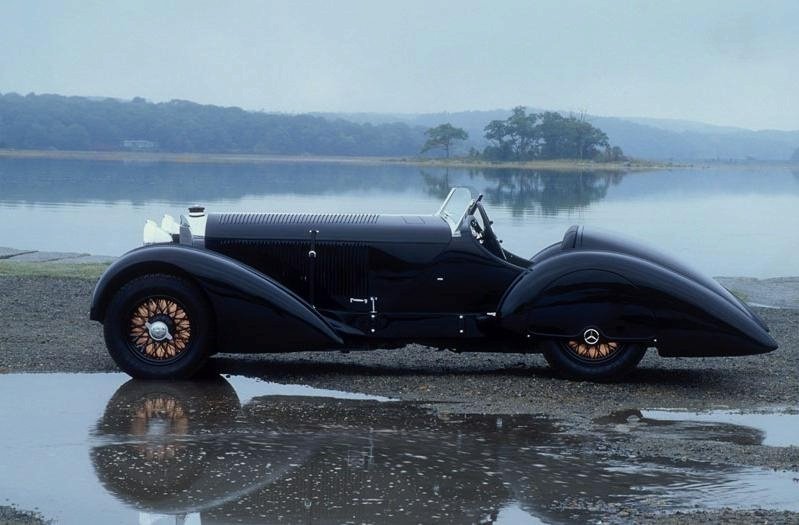
They’ve been at it for longer than anyone else, of course, starting with Karl Benz’s Patent Motorwagen (there’s a name that should be revived) of 1885, the world’s first horseless carriage. And they learnt faster. By the ‘30s Mercedes was producing the fabulous SSK roadster a supercar long before the term had been invented (below) – and Auto Union was building the 560bhp Type C race car. With a sixteen-cylinder engine and a top speed of 236mph in streamliner trim it was so advanced that the Russians stole at least one from occupied eastern Germany at the end of the war a decade later to see what they could learn from its engineering.
During WW2 BMW made one of the first jet engines and Ford made a fifth of the German army’s trucks. Volkswagen made the V1 rocket, but it was a 29 year-old British Army Major named Ivan Hirst who restarted production at its shattered Wolfsburg plant after the war. His superiors told him he was insane. Henry Ford II declined the offer to take it over and the French Government demanded that the lines be moved France as reparations. The move was blocked by the French auto unions. VW went on to make 22 million Beetles and become Europe’s biggest carmaker. Oops.
The cars that Germany has made in the modern era have seldom inspired the affection that we have for the Mini or a 2CV, or the lust we have for an Alfa or a Maserati.
Instead we admire German cars. We climb into a new Porsche 911 and know that the glorious heft and precision of its controls will feel exactly the same after 40 years and 200,000 miles.
A Porsche has a mechanicity that other cars try to bury beneath a veneer of refinement. A good Porsche might be harder and less compromising than cars from the other German marques, but they all have one thing in common, one unifying principle that defines a good German car and has made the German car industry so riotously successful. They are mechanical devices first, and luxury goods second.
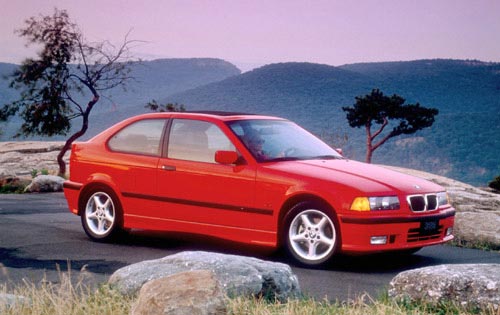
So we admire them, and despite the high prices – because German engineering and labour don’t come cheap – we buy them. The BMW 3-series (below) was once an expensive discretionary purchase but it now outsells the Ford Mondeo. The 3-series, like the 5-series, is so dominant that it defines its market sector; we just call it the 3-series class, and efforts of other carmakers are just known as 3-series rivals.
When I was a road tester on a British car magazine we were constantly criticized for bias towards BMW, but we were just being objective. Almost every car they brought out went to the top of its class. The best example is the E39 5-series, built between 1995 and 2004, which was so effortlessly superior to its rivals that even its brilliant replacement was a slight disappointment.
And not content with perfecting the premium saloons and estates in which they specialize, the Germans have reinvented other industries’ most famous brands. Mini, Rolls-Royce, Range Rover, Bentley Skoda, Lamborghini and Bugatti have all been brilliantly reimagined under German ownership.
Before the current financial unpleasantness the premium German carmakers ‘s sales charts were in near-vertical ascent and were constantly extending their ranges, inventing whole new market niches. The recession won’t slow them down much; fat cash reserves mean they’ll suffer less than their less profitable rivals, and can afford to keep working on the new green tech we’ll all demand when we start buying cars again.
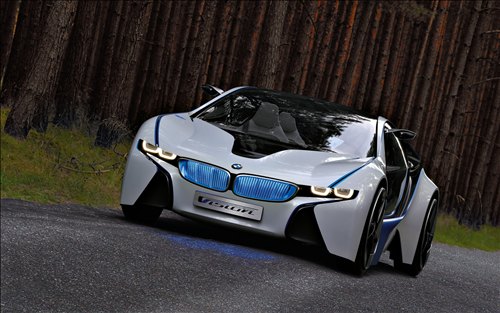
Look at BMW’s Vision EfficientDynamics concept car, which it unveiled at this year’s Frankfurt Motor Show (below). It’s a diesel-electric hybrid; it has 351bhp and 590lb ft of torque, can do 60mph in 4.8sec and has a top speed limited to 155mph, but will average 75.1mpg and 99 g/km, and if you plug it in for two and a half hours you can run it purely electrically for 31 miles. Not cheap to develop, but all of this tech will be in BMW’s production cars within five years. We might be waiting a while before they screw up again.
"It's nice to see a great British institution giving a great German institution the credit it deserves.
It may not be the most spectacular, efficient, cool, sexy or beautiful car that German industry has produced – but it's certainly the most "
"Fettling a machine is comforting at the best of times. In times of crisis it can be a lifesaver. Lifelong mechanic John Hansen shares the story of how he emerged from deep despair by breathing life into a Series 2 Land "
"
In our current bout of obsession with all things vannish and practical we stumbled this morning across yet more beautiful graphic goodness focussed on the split screen microbus.
Nothing really to say about this apart from how gobsmackingly stylish these "
"
His is not one of the Italian names that dances trippingly off the tongue when speaking of innovation in car design. In fact, the prodigious moustache wearer and smoker of cigars isn't even Italian. But that doesn't mean he's not "
"Launched in 1993 the DB7 was the culmination of Aston receiving Ford’s financial muscle and TWR’s engineering know-how. Ford had bought a majority share in Aston in 1998 and TWR – also owned by Ford and who had developed the XJ-S "
"Few concepts are guaranteed to get us hot under the collar like Audi's resurrection of the original Quattro.
The Audi Quattro concept car from 2010 commemorated 30 years of Quattro all-wheel-drive and specifically paid homage to the revered Sport Quattro of 1984. First "
"
The first motorised vehicle I ever owned was a 1986 Vespa T5 ‘Pole Position’. It was red and black. It had a little fairing on the bars. The one with the rectangular headlight and the ‘moon disc’ style wheels.
A little "
"Steve Sanderson and Oi Polloi have become a fixture on the streets of Manchester’s Northern Quarter.
I set up Oi Polloi with my business partner Nigel, almost exactly 20 years ago. We’re a menswear retailer and now a brand "
"Cars change. It’s a simple statement, and an observable one. At the same time, it could be argued they don’t. The steering, the exhaust note, the grip of the tyres to the road – though these may technically vary "




Never mind the cars, chack the lederhosen!