"Hotels are like restaurant food. You can go for the McBurger end of the market: cheap, easily available and utterly flavourless. You wake up in a bed identical to those stocked by equivalent outlets all across the world, with a "


If you love to drive, then it follows that you should love your car. It might seem obvious to some that falling in love with the car you drive is something to strive for: but think about it a little deeper and you can see that automotive infatuation just might help to save the planet.
And nowhere is the point more relevant when you look at how English sports car company Morgan’s died-in-the-wool world view could soon be the model to which the bigger car corporations turn in the name of survival.
The retro styling of a Morgan’s design isn’t to everyone’s taste – but the micro manufacturing way of doing things they employ has created arguably the most sustainable form of car industry as exists anywhere.

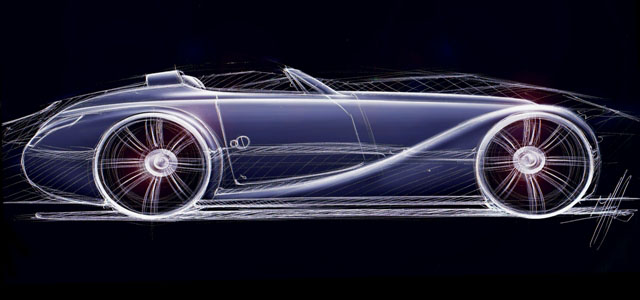


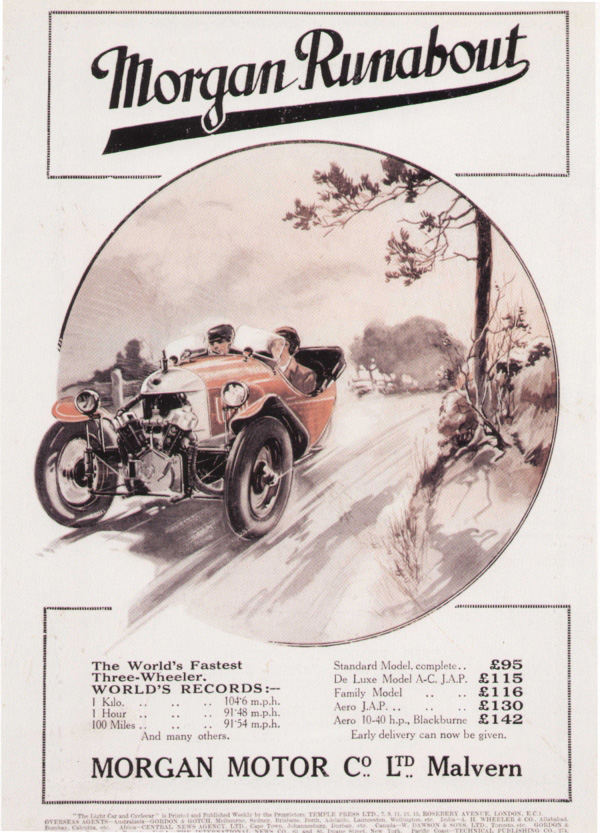

But it’s not only the BMW ‘Efficient Dynamics’ motors in the newest Morgans that colour them green. It is the overall environmental impact on a product that most closely defines how ‘green’ a product can be rated. As Cardiff University’s ground breaking Environmental Rating for Vehicles (ERV) study, the Morgan 4/4 rated a highly respectable score of 28 (the Bentley Arnage rated 2, and the Smart for 2 rated 60, though we personally wouldn’t be seen dead in one of them).
So it is possible to create fun, dynamic cars that don’t destroy the planet without resorting to new fangled fuels and drivetrains.
The open secret of Morgan’s vision is that its business model is based upon low volume production, the long life cycle of their product range and that ptoduct’s simplicity and durability. In other words, it is much more eco friendly to avoid built in obsolescence, high-impact, capital-heavy multiple product development and the use of componentry and materials that are less than vital for a car’s primary purpose.
Morgan began using Ash wood sub frames because of the scarcity of steel in the post war years, but now the use of timber in their cars’ construction is one of the mainstays of the Morgan philosophy. By using lightweight renewable materials such as steel, timber and leather rather than the energy-intense aluminium and other composites to keep weight down and you’ll increase environmental as well as dynamic performance.
Simplicity of design, low volume of production of highly durable and emotionally appealing cars leads us to love our four wheeled companions. Not only is that what every passionate driver desires, but it also makes it much more likely that we’ll care for and nurture our car through an extended life-cycle. This avoids the endless promotion of the new – the basis of course on which not only the car industry, but mass production itself has always relied upon.
And therein lies the rub. If car companies are to survive they need to move closer to the Morgan business model. This ultimately means that fewer cars will be produced and therefore fewer employees in the primary stage of manufacturing will be needed to produce them.
This sort of restructuring is logistically complex and politically sensitive. Cutbacks that these sort of innovations entail rolls down the structure of business and society in general.
If we’re serious about changing the way we produce and consume cars, then livelihoods based on old style mass production will be harder and harder to sustain.
If however, manufacturing turned wholeheartedly to Morgan’s ‘Micro Factory Retailing’ model, then we could reasonably expect that eventually service industries would spring up to support the nurtuing of this new generation of ‘slow build’ vehicles. These smaller scale cottage industries, dedicated to micro manufacturing spare parts and after-market mods and other products, would create jobs, wealth and commerce in its wake.
Crucially, it would be easier and more economically viable for this new wave of industry to introduce in turn their own cleaner, more sustainable processes.
Wether this is a misty eyed piece of wishful thinking or a quiet, wood and leather-wrought revolution only time will tell. Either way, these last few years we’ve begun to look at Morgan’s world view altogether differently.
CLICK TO ENLARGE

"Few concepts are guaranteed to get us hot under the collar like Audi's resurrection of the original Quattro. The Audi Quattro concept car from 2010 commemorated 30 years of Quattro all-wheel-drive and specifically paid homage to the revered Sport Quattro of 1984. First "

"Scotland has a majesty like no other that must be seen, to truly be believed. From incredible mountain ranges to open fields teeming with wildlife and grand lochs that take your breath away every time they crawl into sight – this "

"Take the speed of Senna, the wet weather prowess of Schumacher, the smoothness and mechanical sympathy of Prost, the versatility and enthusiasm of Andretti and the humility of a country boy and you've got the recipe for the greatest racing "


With regard to your dismissal of the Smart Fortwo, I was unsure about them until we bought one for my wife. It's great fun and very well equipped. I “pinch” it whenever I get the chance and absolutely love using it. Seriously, give it a try and see what I mean. The little turbocharged motor goes well and sounds great.
It's a real marmite car even among car nuts. One of our mates has a Smart
which he had remapped by Smart Car Super Store, and he absolutely loves it.
He says the tuning really helps out on hills.
People who say I wouldn't be seen dead in one really have problems and go through life not fully informed. For a motoring journalist to say this shows they are not worthy of the title because they most of all should be unbiased in their oppinion.
Morgans method of production while good for Morgan wouldn't work for the masses. Look at any cottage industry produced motorcar and the price's are prohibitive. This is how the automotive industry started just over a hundred years ago when only the rich could afford the first cars.
Henry Ford solved this elitism with mass production thus putting the working man on wheels.
If we are to slow production and own cars for longer periods then some form of population control will have to be implemented as well.
I agree with Mr Morrison on the aesthetic of the Smart. And I like it that the writers on this site are opinionated. 'Unbiased' journalism rarely, if ever exists, across the media. There are always agendas shot through everything that anyone writes.
That aside, I perceive no grandeur, no passion, no beauty in the Smart. And these things are the things that I look for in my motoring. Life's too short to own a car conceived in a focus group.
Pete my wife thinks life is too short to be concerned about what motor car one drives full stop!
I can appreciate your personal view comparing the Smart to the Morgan but there are a lot of Smart owners who would take the opposite view. They have a passion for practical efficient design over gratuitious retro design and see beauty and grandeur in this.
I may be unusual but I personally like extremes of the spectrum, its the bland faceless products for the mass'es that get little of my attention.
I like the Smart for what it is, not what it isn't, it's not a Ferrari but then a Ferrari is not a Smart, ie they both are beauties in their own design parimenters. I still find most people are biased in one direction rather than keeping an open mind about motor cars. We would have a dull choice of product if the manufacturers adopted this view.
The Morgan Aero is built from wood,leather and aluminum not steel. The other Morgan have a small amount of steel (chassis)